
Try Scar Tissue Release Therapy
Some people may wear scars as a badge of honour but generally in life your body and mind are better off without them. Scars are the sign or remnants of trauma, and bodies don’t really work to the best of their abilities with trauma.
Scar tissue is in many respects a wonderful thing. It is a natural part of the body’s amazing ability to heal itself following surgery, injury, breakages, burns or even just minor accidents. However, whilst scars are a sign of recovery, major traumas can also create long-term complications such as restricted movement, discomfort, pain, and emotional distress. In physical terms scar tissue can quite quickly adhere to surrounding muscles, fascia, and organs, limiting function and affecting posture and wellbeing.
The vast majority of people live with their scars, not realising they can do anything about them. But Scar Tissue Release Therapy is a remarkably effective manual therapy designed to address both physical and emotional challenges. As a practitioner of the McLoughlin Scar Tissue Release (MSTR) method, one of the most effective and gentle techniques available today, I have had some quite amazing results..
So what is scar tissue?
When the body experiences trauma, it responds by producing collagen fibres to repair the damage. These fibres form a scar, a dense, fibrous tissue different in texture and flexibility from the surrounding healthy tissue. Unlike normal tissue, scar tissue has a disorganized collagen structure, which can lead to adhesions. Adhesions occur when the scar binds to layers of muscle, fascia, or skin that would normally move freely. This can restrict motion, create pulling sensations, and even cause pain in areas distant from the scar itself, due to the interconnected nature of the body’s fascial system.
Scars can also have profound emotional effects. For many people, scars represent traumatic experiences – such as surgery, accidents, or childbirth – which can cause the body to hold emotional tension in the affected area.
What Is Scar Tissue Release Therapy?
Scar Tissue Release Therapy encompasses various techniques developed to soften, mobilize, and realign scar tissue. Practitioners use gentle, hands-on, manipulation to free adhesions, improve circulation, and restore mobility to affected areas. The therapy often enhances lymphatic drainage and nerve communication, which can lead to improved sensation and reduced pain.
The goals of Scar Tissue Release Therapy include:
Improving mobility and flexibility: By freeing adhesions, the surrounding tissue can move more freely, reducing restriction.
Reducing pain and discomfort: Many clients experience relief from chronic pain associated with scar-related tension.
Restoring sensation: Some scars can be numb or hypersensitive; therapy helps normalize sensation.
Improving appearance: While the therapy is not primarily cosmetic, many people notice scars becoming flatter, lighter, and softer.
Enhancing emotional wellbeing: Releasing tension within the scar can help clients process and release stored trauma.The McLoughlin
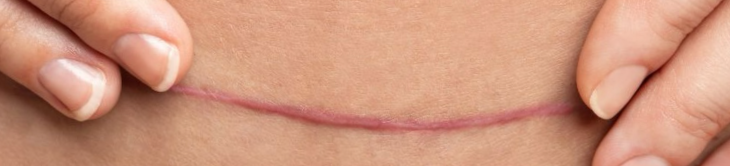
Are you unhappy with your scar?
Is it uncomfortable or causing restriction?
Scar Tissue Release (MSTR) Technique
Developed by Alastair McLoughlin, the McLoughlin Scar Tissue Release (MSTR) method is a gentle, non-invasive, and highly effective approach to working with scars. McLoughlin, an experienced bodyworker and therapist, created the technique after years of observing the profound effects that scars have on the human body. MSTR has since gained international recognition for its simplicity, safety, and remarkable results.
As a qualified MSTR practitioner I work with a specific, light touch. I do not require oils, creams, or tools, which makes it safe for almost all types of scars, even older or sensitive ones. I simply apply a series of small, precise movements to the scar and surrounding tissue. These movements stimulate the body’s natural healing response, encouraging the collagen fibres to realign and rehydrate.
What makes MSTR particularly appealing is that noticeable improvement often occurs in just one or two sessions. Clients frequently report a sense of lightness or freedom in their bodies immediately after treatment.
What type of scars can MSTR help
The MSTR technique is suitable for most scars that are at least eight weeks old (or fully healed). It can be applied to a wide variety of scars, including:
Surgical scars: C-section, appendectomy, heart surgery, knee or hip replacement, etc.
Burns
Traumatic injury scars – broken bone interventions, industrial or workplace accidents
Mastectomy or breast augmentation scars
Spinal surgery scars
The method is gentle enough for all ages and body types. However, it should not be applied to open wounds, infected tissue, or scars that are still healing. As a practitioner I have received specialized training and certification to ensure that I work safely and effectively.
Benefits and outcomes of the McLoughlin Scar Tissue Release Method
The MSTR technique has been shown to provide a wide range of benefits, including:
Reduced pain and discomfort in and around the scar.
Improved range of motion in joints or muscles affected by adhesions.
Enhanced tissue softness and flexibility.
Improved appearance of scars—flatter, lighter, and smoother.
Restored sensation in areas that were numb or hypersensitive.
Emotional release and relaxation, contributing to overall wellbeing.
"Lindsay suggested that the scars I accrued following my quadruple Coronary Artery Bypass Graft, which took veins from my legs to replace the arteries in my heart, were the cause of the dead feeling in my left foot. Amazingly, after only 20 minutes working on the 30 cms scar on my left calf, sensation returned to my lower leg and, rather than having a ‘lump of meat’ on the end of it, I got my left foot back."
A.C., Horsham, W Sussex
How MSTR Works
The McLoughlin method works on multiple levels: structural, neurological, and emotional. On a physical level, it helps to break down adhesions within the scar and underlying tissues, restoring elasticity and improving circulation. This can enhance the exchange of nutrients and waste products, supporting the body’s ability to remodel the tissue naturally.
On a neurological level, MSTR appears to help “re-educate” the nervous system. Scars can create altered nerve signalling, leading to hypersensitivity or numbness. By gently stimulating the area, the therapy helps normalize nerve communication, improving sensation and reducing pain.
On an emotional level, the technique is deeply calming. Many clients report feeling a sense of emotional release during or after treatment. Because scars can be linked to past trauma, the process of releasing restrictions can bring about a sense of closure or relief.
Is it worth me getting your scars looked at?
Scar Tissue Release Therapy plays a vital role in restoring comfort, mobility, and balance to the body after injury or surgery. The McLoughlin Scar Tissue Release (MSTR) technique, in particular, stands out for its gentle yet powerful approach to releasing physical and emotional restrictions held within scar tissue. By addressing the underlying adhesions and restoring normal tissue function, MSTR not only improves physical wellbeing but also supports emotional healing. As awareness of this method grows, more people are discovering that scars don’t have to be a permanent source of discomfort or limitation. Instead they can, be gently transformed into a source of healing and renewed freedom.